
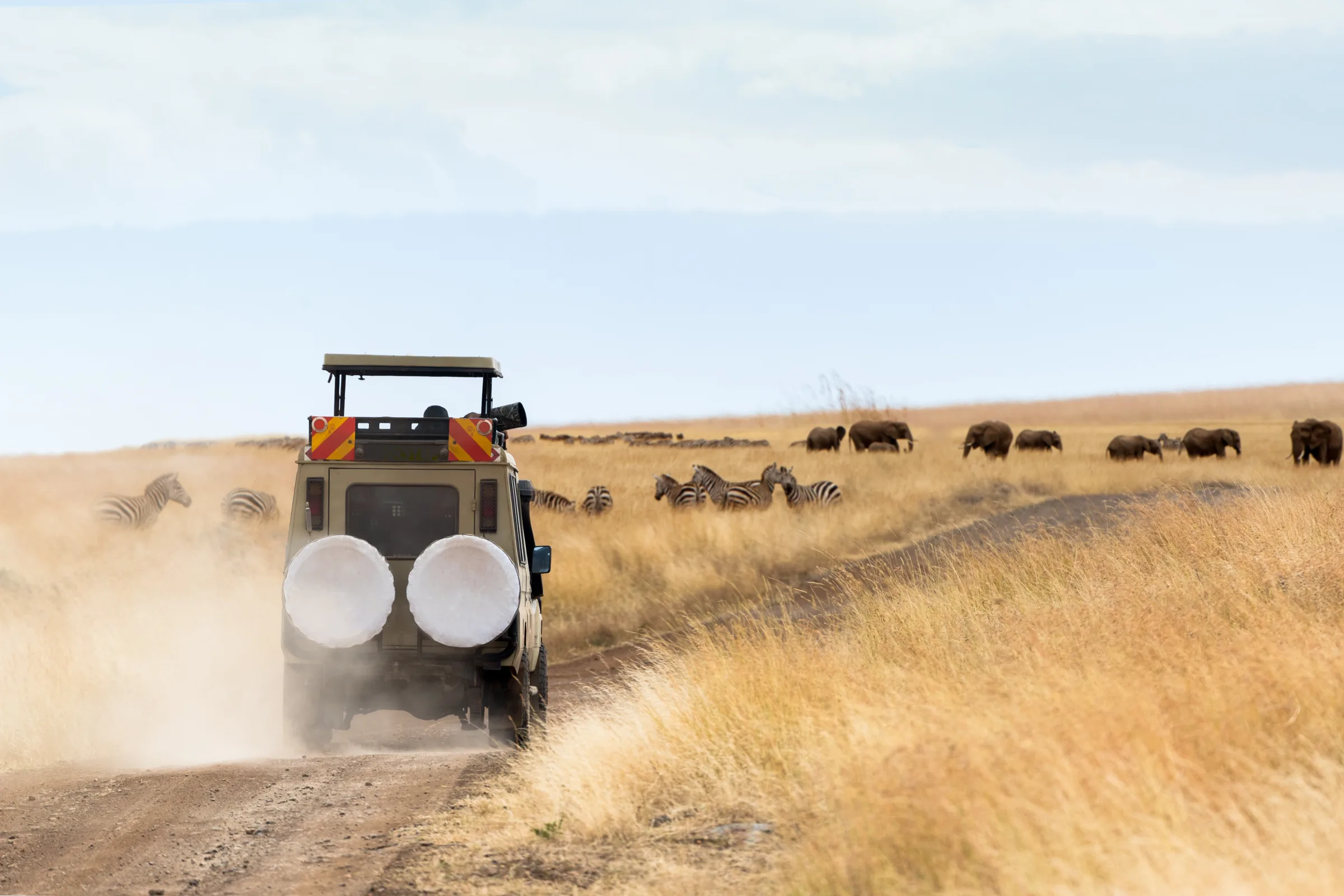
One ecosystem, two different experiences
Tsavo is one of Kenya's great wildlife landscapes, divided for visitors into eastern and western national parks. Both belong in a serious coast-safari conversation, yet they should not be treated as interchangeable labels. Tsavo East is associated with broad horizons, red earth and long views across open country. Tsavo West is greener and more varied, with hills, lava country, springs and denser vegetation in many areas.
That difference changes how a game drive feels. Open country can make animals easier to scan for at a distance, while thicker landscapes reward patience, tracking and attention to smaller signs.
Choose Tsavo East for a simple short route
For guests beginning at the coast, Tsavo East is the natural focus of many shorter itineraries. A one-day Tsavo East safari is possible for travellers who must return to Mombasa the same evening. Staying overnight gives the route more breathing room and creates two distinct game-drive periods.
The park is closely associated with elephants coloured by the red dust, but no responsible operator can promise particular animals on a particular day. The value lies in time spent reading the landscape with a guide: checking water, shade, tracks and the movement of prey species rather than racing between reported sightings.
Choose Tsavo West for landscape variety
Tsavo West suits travellers who want the scenery to be part of the story. Its volcanic history, changing elevation and greener sections contrast with the eastern park. Wildlife can be less immediately visible in thicker cover, which makes guiding and patient observation especially important.
Because the route reaches farther and the park deserves time of its own, Tsavo West usually fits better into a multi-day itinerary. It combines naturally with Tsavo East when you have enough time to experience both rather than simply drive through them.
When to combine both parks
A Tsavo East and West safari gives contrast, but read the daily plan carefully. Two days can work as an energetic introduction; adding another day makes room for a calmer pace and stronger game-drive windows. Your lodge locations, entry gates and the direction of travel matter as much as the number of nights.
If you are travelling onward to Nairobi or adding Amboseli, ask whether the park order follows the geography of the complete trip. A good route avoids unnecessary backtracking and uses transfer time to move you toward the next part of the holiday.
Let season and conditions inform the plan
Wildlife movement, vegetation, water and road conditions change through the year. The dry season can concentrate activity around reliable water and make some sightlines more open. Greener months bring dramatic colour, young animals and rewarding birdlife, but rain can alter road conditions. There is no single month that is best for every traveller.
Share your actual dates before treating a sample itinerary as final. The FAD team can explain the current route, likely conditions and suitable accommodation for that period without pretending nature follows a timetable.
A practical decision
- One day: focus on Tsavo East.
- Two days: choose a deeper Tsavo East stay or an energetic East-West introduction.
- Three or more days: combine landscapes more comfortably or add Amboseli.
See the available Mombasa safari routes, then ask which option gives your group the most wildlife time for the dates you have.
