
Short answer: the Masai Mara, Serengeti and Ngorongoro are the classic first choices; Amboseli and Tsavo are excellent for Kenya routes; Samburu adds northern species and dry-country scenery; Bwindi and Volcanoes National Park lead for gorilla trekking; and Uganda's Queen Elizabeth and Murchison Falls broaden a primate-and-savannah journey.

How to choose an East Africa safari destination
The most famous park is not automatically the best fit for every trip. Start with the animals and landscapes you value, then consider the arrival airport, road time, number of nights and season. A route with three well-chosen areas can produce a better safari than a long list of parks visited too quickly.
The destinations below are not ranked by a universal score. Each is “top” for a different reason, and the strongest itinerary usually combines complementary experiences.
1. Masai Mara, Kenya: classic plains and big cats
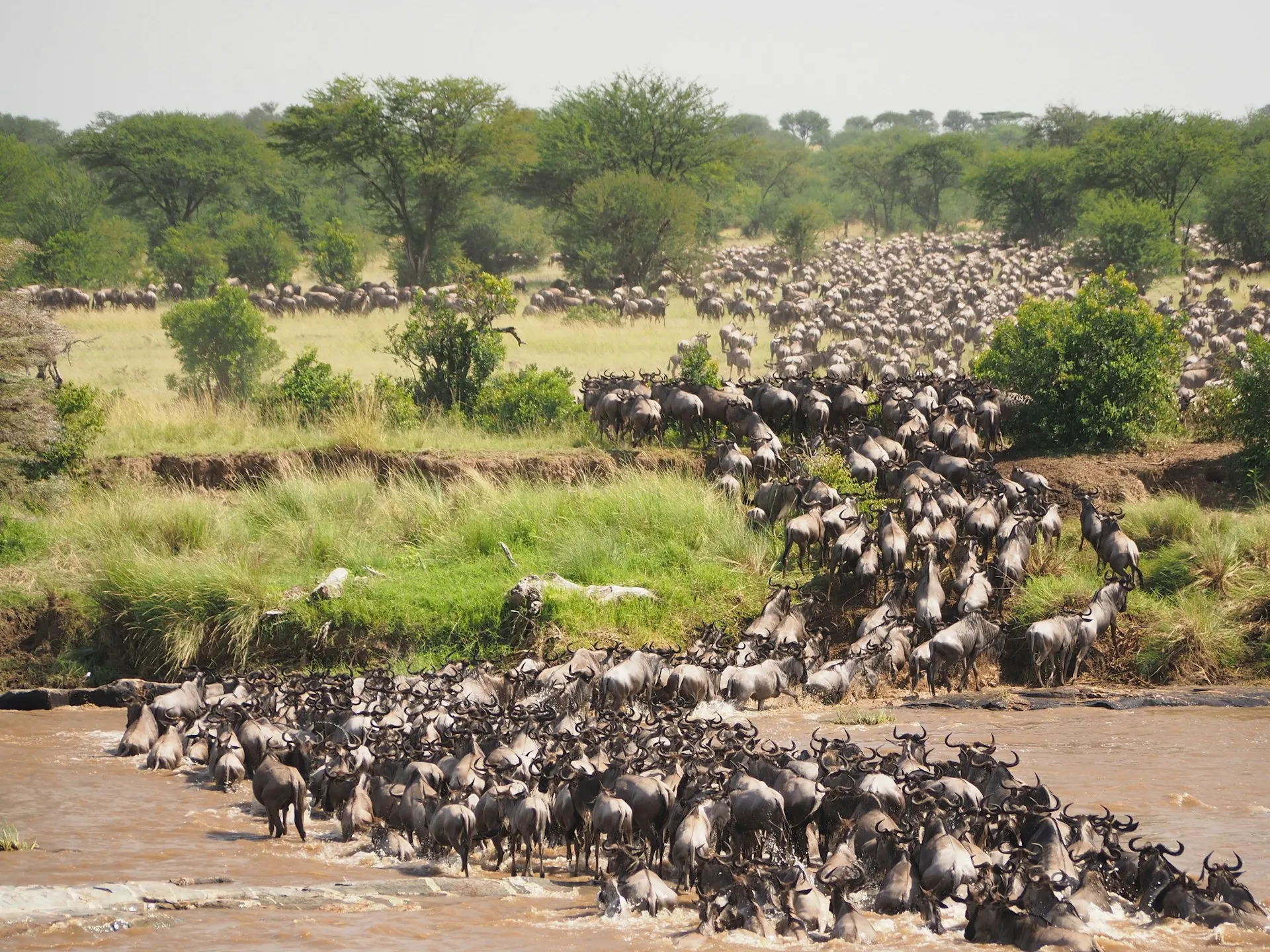
The Masai Mara is one of East Africa's best-known wildlife landscapes. Open grasslands support year-round resident wildlife, while migrating herds often arrive from the Serengeti during the middle and later dry season. The Mara is a strong choice for lions, cheetahs, open-country photography and a first safari.
Allow enough nights to explore beyond the busiest areas. A conservancy stay can add a different style of guiding and lower vehicle density, depending on the itinerary and budget.
2. Serengeti, Tanzania: scale and the migration cycle
The Serengeti is not one small viewing area. Its central, western, northern and southern sectors match different seasons and migration stages. Resident predators and plains game make it rewarding even when the largest herds are elsewhere.
Choose the sector carefully. A camp far from the expected herd location can turn a migration safari into long daily transfers. Tanzania National Parks identifies the Serengeti as the home of the world's remaining large terrestrial mammal migration.
3. Ngorongoro, Tanzania: a concentrated crater experience
Ngorongoro adds a dramatic volcanic landscape to a northern Tanzania circuit. The crater floor supports dense wildlife viewing within a compact area, while the highlands create cool, scenic overnights. It combines naturally with Serengeti, Lake Manyara and Tarangire.
Ngorongoro is popular and access is managed, so it works best as a planned part of a route rather than a last-minute add-on.
4. Amboseli, Kenya: elephants beneath Kilimanjaro
Amboseli is closely associated with elephants and views toward Mount Kilimanjaro. The mountain is across the border in Tanzania and is often clearest early in the day, but cloud can hide it at any time. Wetlands and open plains create varied wildlife habitat.
Amboseli fits routes from Nairobi and combines with Tsavo for journeys continuing to the Kenya coast.
5. Tsavo East and Tsavo West, Kenya: wilderness from the coast
Tsavo East offers broad red-earth landscapes, the Galana River and a practical road connection from Mombasa. Kenya Wildlife Service describes it as Kenya's largest national park and highlights its red elephants, Yatta Plateau and varied birdlife. It is the clearest choice for a short safari from the coast.
Tsavo West is greener and more varied, with volcanic terrain, springs and hillier scenery. Combine both when the itinerary has enough time to enjoy their contrast.
6. Samburu, Kenya: northern landscapes and specialist wildlife
Samburu changes the visual language of a Kenya safari. Dry-country scenery, the Ewaso Ng'iro River and wildlife associated with northern Kenya make it a valuable contrast to the southern grasslands. It pairs well with central Kenya conservancies and the Rift Valley.
7. Bwindi, Uganda: mountain gorilla trekking
Bwindi Impenetrable National Park is Uganda's best-known gorilla-trekking destination. Uganda Wildlife Authority notes that treks may last from two to seven hours depending on the gorillas' location. This is an active forest experience rather than a game drive, and permits are limited.
Combine Bwindi with Queen Elizabeth National Park for savannah, boat and primate experiences, or add Lake Bunyonyi for a slower landscape between travel days.
8. Murchison Falls and Queen Elizabeth, Uganda: water and savannah
Murchison Falls combines game drives with the Nile and the force of the falls. Queen Elizabeth brings varied ecosystems, the Kazinga Channel and access to the Ishasha sector. These parks suit travellers who want more than a single gorilla trek from an Uganda itinerary.
9. Volcanoes and Akagera, Rwanda: primates plus savannah
Volcanoes National Park protects Rwanda's Virunga slopes and offers mountain gorilla and golden monkey trekking. Visit Rwanda describes a mosaic of bamboo forest, montane ecosystems, grassland and heath across the volcanic landscape.
Akagera National Park adds savannah, wetland, lakes, game drives and boat trips. Pairing the two makes Rwanda a compact option for travellers who want both primates and traditional safari wildlife.
10. Tarangire, Tanzania: elephants and baobab country
Tarangire is known for elephants, baobabs and dry-season gatherings around the Tarangire River. TANAPA describes it as a year-round park whose seasons produce different experiences. It is a natural opening or closing chapter for Serengeti and Ngorongoro circuits.
Match the destination to the traveller
- First safari: Masai Mara, Serengeti, Ngorongoro or a well-paced Kenya circuit.
- From a Mombasa beach hotel: Tsavo East first; add Tsavo West or Amboseli with more nights.
- Great Migration focus: Serengeti sector or Masai Mara matched to the month.
- Elephants and scenery: Amboseli, Tarangire and Tsavo.
- Gorillas and primates: Bwindi or Volcanoes, with Kibale or another forest where the route allows.
- Fewer repeated landscapes: combine one plains destination with forest, highland, river or coast.
East Africa destination questions
What is the best safari destination in East Africa for a first visit?
Masai Mara and Serengeti are classic first choices for open-plains wildlife, while Ngorongoro adds a compact crater experience. The best route depends on arrival point, dates and trip length.
Which East Africa safari destination is closest to Mombasa?
Tsavo East is the most practical major wildlife park for a road safari from Mombasa, with one-day and overnight options available.
Where is the best place to see mountain gorillas?
Bwindi and Mgahinga in Uganda and Volcanoes National Park in Rwanda are leading mountain-gorilla destinations. Permits and trek logistics must be arranged in advance.
Should I choose Kenya or Tanzania for the Great Migration?
Choose Tanzania for the longest share of the annual cycle, including calving, and Kenya for the usual Masai Mara period from roughly July to October. A combined route can cover both.
How many safari destinations fit into one trip?
Two or three complementary destinations usually fit a one-week safari well. More parks may be appropriate on longer journeys, provided transfers do not replace game-drive time.
Official destination sources
- Kenya Wildlife Service: Tsavo East National Park
- Tanzania National Parks: Serengeti National Park
- Tanzania National Parks: Tarangire National Park
- Uganda Wildlife Authority: National Parks
- Visit Rwanda: Volcanoes National Park
- Visit Rwanda: Akagera National Park
Explore all FAD Safaris destinations, then use the safari finder to narrow the route by country, park and trip length.
